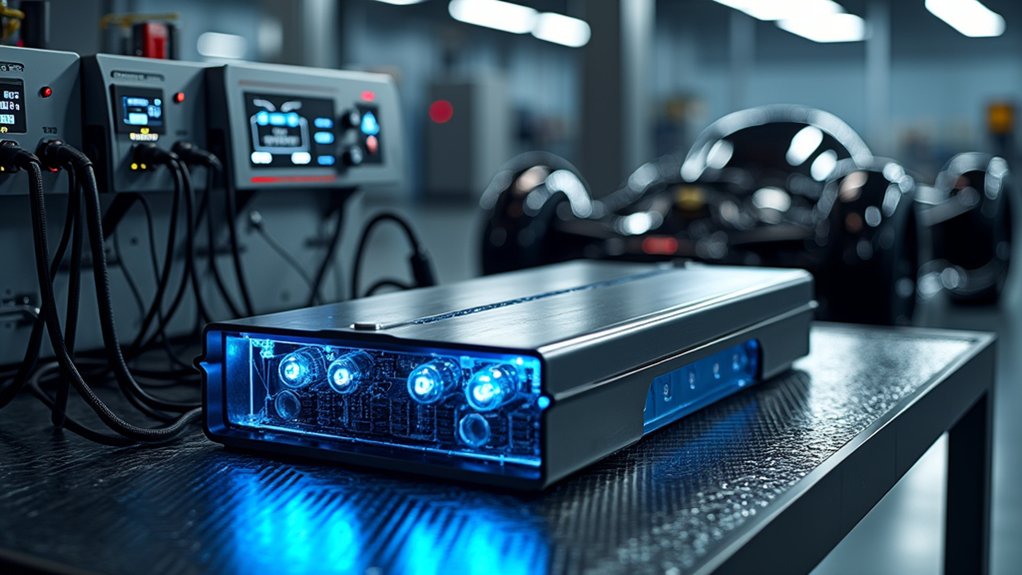
While the electric vehicle industry has been grappling with charging time limitations for years, RML Group’s newly developed VarEVolt battery technology has shattered conventional barriers with an unprecedented 200 C rating. This revolutionary advancement enables a complete charge or discharge cycle in just 18 seconds—a feat that puts conventional EV charging times to shame. For perspective, the Porsche Taycan, considered among the faster-charging production EVs, operates at a mere 4-5 C rating, requiring 12-15 minutes for comparable charging.
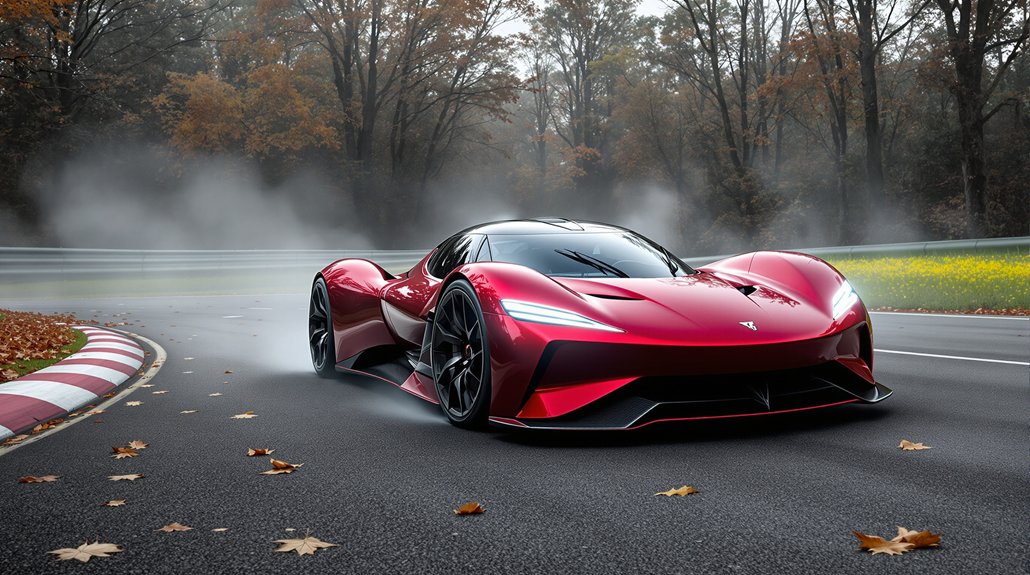
The VarEVolt’s true distinction lies in its remarkable power density of 6 TW/kg, positioning it as a game-changer for street-legal performance vehicles. I’ve observed that while other manufacturers chase energy density improvements, RML has taken the contrarian approach of prioritizing rapid power delivery over range. This strategy makes perfect sense for high-performance applications where immediate power access trumps maximum driving distance. Graphene-based solutions could further enhance these ultra-fast charging capabilities while maintaining high energy density. The technology is already powering the innovative Czinger 21C hybrid hypercar, demonstrating its real-world capability in ultra-performance vehicles.
Recently certified for mass production with UK government Conformity of Production approval on June 2, 2025, the VarEVolt utilizes a modular architecture that allows manufacturers to calibrate their battery systems for ideal range, power output, or balanced performance depending on vehicle requirements. The modular design can be manually adjusted by users to optimize their driving experience based on specific needs and preferences.
The technology emerges amid fierce competition in the battery development landscape. CATL’s lithium metal batteries have achieved 500 Wh/kg energy density with 483 cycles, while Stellantis and Factorial Energy’s solid-state cells boast 375 Wh/kg and 4C discharge rates with impressive thermal resilience from -30°C to 45°C.
RML Group has established strategic partnerships with automotive OEMs specifically targeting high-performance vehicle integration, complementing Stellantis/Factorial’s focus on pack architecture optimization and CATL’s sustainability initiatives.
These parallel development tracks—RML’s rapid charging, CATL’s range-extending density, and Stellantis-Factorial’s solid-state efficiency—represent different solutions to EV adoption barriers.
The UK-based innovation introduces fresh competition to a market historically dominated by Chinese manufacturing, potentially rebalancing global EV technology leadership while delivering the most track-worthy street-legal EV experience imaginable.