While the UK pushes toward its ambitious net-zero targets, January 2025 marked a concerning change in the nation’s energy landscape with gas domination hitting a four-year high. Gas generated 38% of electricity that month, while wind energy delivered just 27% – its lowest January contribution in four years.
This troubling regression coincided with zero-carbon sources falling to 43% of the generation mix, another four-year low for January. The carbon intensity of electricity production consequently rose to 168 gCO₂/kWh, the second highest January figure in four years.
This setback comes despite renewables contributing 42.3% to UK energy production over the preceding 12 months, with wind sources accounting for nearly 30% of that total. I’ve tracked these metrics closely, and the trends reveal both challenges and opportunities in Britain’s energy evolution.
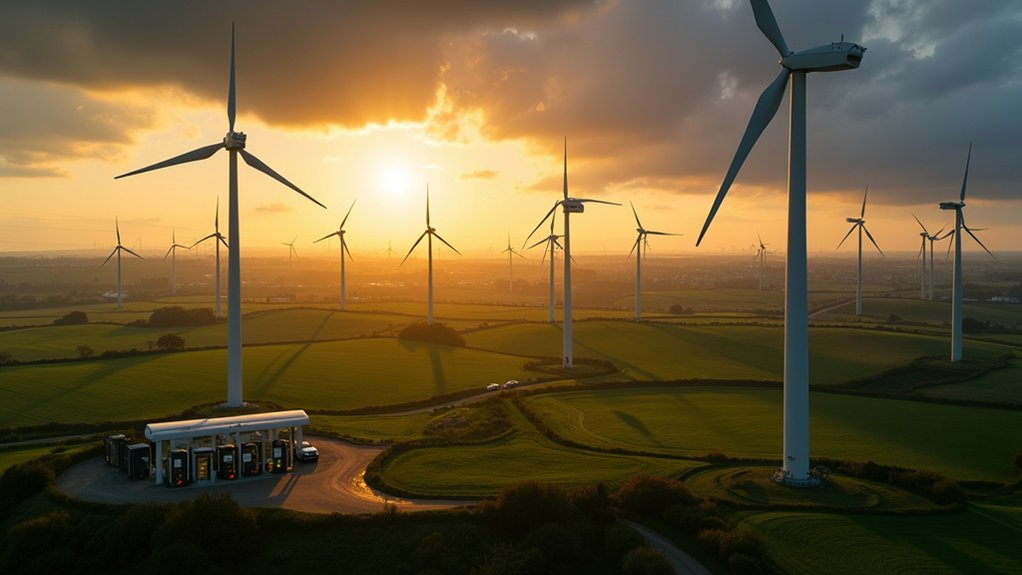
Energy Secretary Ed Miliband has disclosed plans to nearly double onshore wind capacity over the next five years, addressing deployment barriers that have historically hampered expansion. This strategy aims to increase capacity from 14.8GW to 27-29GW by 2030, forming a crucial part of the clean power transition. The strategy demonstrates pragmatic recognition of wind’s economic efficiency compared to alternative sources.
His initiative includes making it easier for homeowners to install garden turbines, an approach I consider sensibly incremental rather than revolutionary. Britain’s growing import dependency – now at 47% of total energy needs – underscores the urgency of Miliband’s push. The complete absence of coal contribution in the energy mix since September 2024 further highlights the transition challenges.
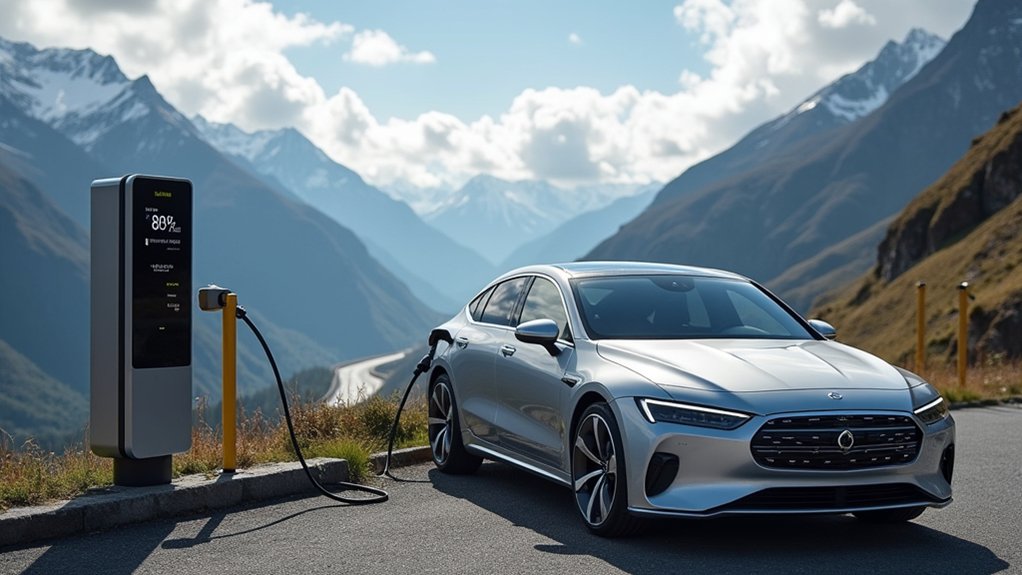
Domestic energy production declined 1.5% year-on-year to 24.9 million tonnes oil equivalent in Q1 2025, a trajectory that threatens both energy security and price stability. The shift toward renewable energy aligns with trends seen in the EV industry, where charging networks expanding significantly strengthens the environmental benefits of clean energy. Offshore wind currently dominates the UK’s wind portfolio, generating almost two-thirds of wind electricity, or approximately 18% of total supply.
The Onshore Wind Taskforce, working in concert with industry stakeholders, aims to rebalance this distribution through coordinated growth initiatives. The 12-month rolling average carbon intensity has fallen to 125 gCO₂/kWh, its lowest in four years, suggesting long-term progress despite January’s setback.
Achieving net-zero targets will require accelerated deployment of renewable capacity, with onshore wind poised to play an increasingly central role in England’s changing energy matrix.