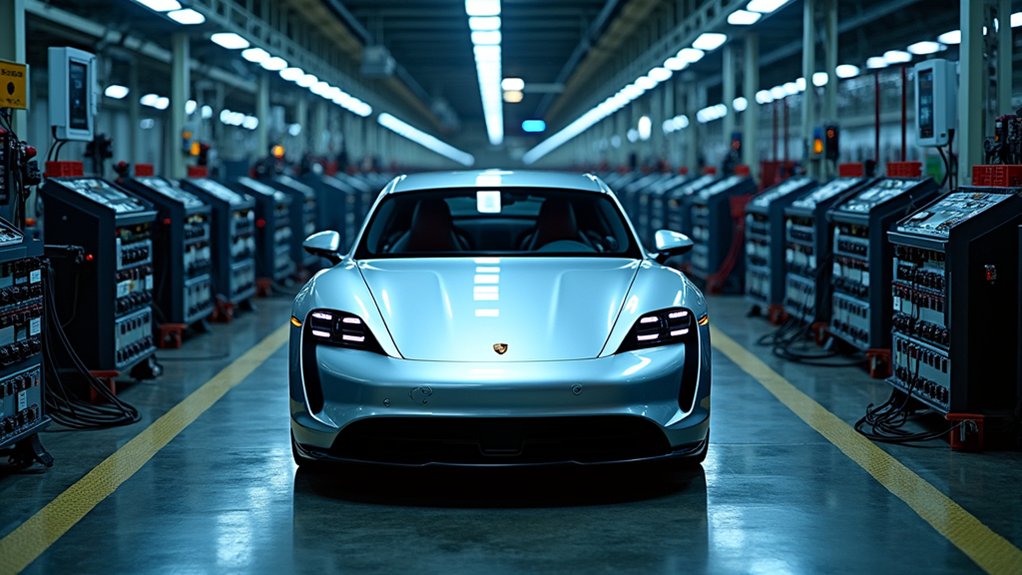
Despite its reputation for engineering excellence, Porsche AG finds itself traversing treacherous terrain as battery supply disruptions and market headwinds threaten to derail its electric vehicle ambitions. The bankruptcy of Northvolt, Porsche’s Swedish battery supplier, has forced a significant postponement of the electric 718 models to 2027, creating a precarious product gap as current gasoline versions face discontinuation due to European cybersecurity regulations. The company’s internal strategy of aiming for 50% electrified sales by 2025 has been reluctantly scaled back due to these setbacks.
Porsche’s electric dreams collide with supply chain realities as Northvolt’s bankruptcy forces a critical product roadmap rethink.
The financial repercussions are substantial. Porsche has downgraded its 2025 sales revenue forecast to €37–38 billion from €39–40 billion, while slashing return on sales targets to 6.5–8.5% from the previous 10–12%. I’ve tracked Porsche’s performance metrics for years, and this 3.5-point downward revision represents one of the steepest corrections in the company’s recent history.
Battery challenges have become particularly costly, with special expenses rising from €800 million to €1.3 billion for 2025. These challenges mirror industry-wide concerns about potential battery material shortages projected to affect lithium, nickel, and graphite supply by 2030. The company’s Cellforce battery subsidiary is undergoing restructuring, abandoning plans for independent expansion in favor of strategic partnerships—a pragmatic but telling retreat from vertical integration.
Market forces have proven equally problematic. The anticipated EV adoption curve hasn’t materialized, with battery-electric vehicles stagnating at 20–22% of sales. Geopolitical tensions, especially in China, have dampened luxury EV demand while North American import tariffs threaten profitability in that growth market. The company’s Q1 2025 deliveries in China saw a 42% decrease year-on-year, highlighting severe challenges in this crucial luxury market.
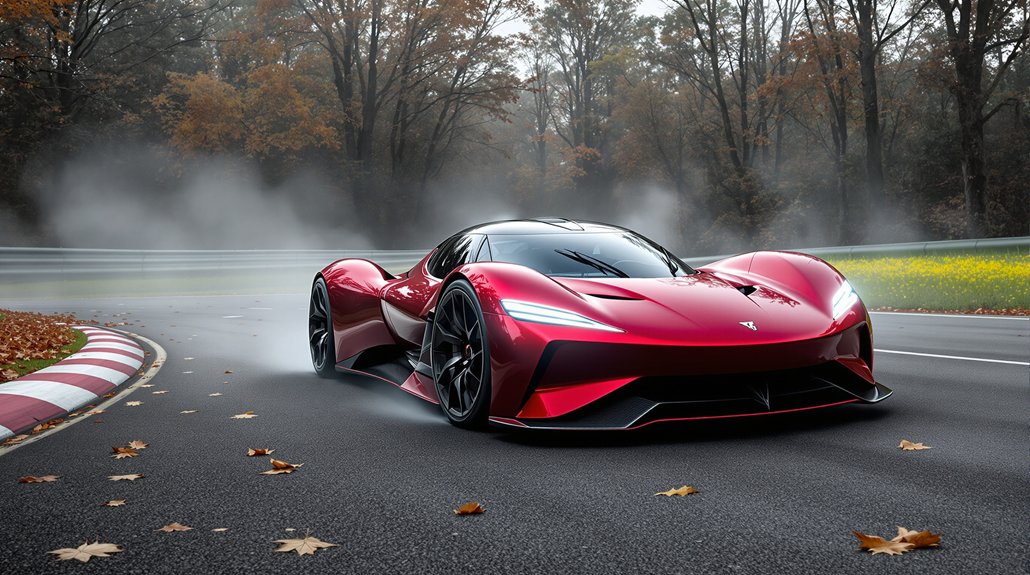
Technical challenges persist as engineers struggle to replicate the driving dynamics of gasoline-powered Porsches in their electric counterparts. The signature characteristics of the Boxster and Cayman—linear power delivery, precise handling, and emotional engagement—have proven difficult to recreate in EV form.
Porsche now faces a strategic crossroads. The company must balance its proud heritage against electrification imperatives while maneuvering supply chain uncertainties and volatile regulations.
With global deliveries already down 8% year-on-year in Q1 2025, the Stuttgart automaker needs to execute flawlessly to maintain its position in the increasingly competitive premium EV segment.