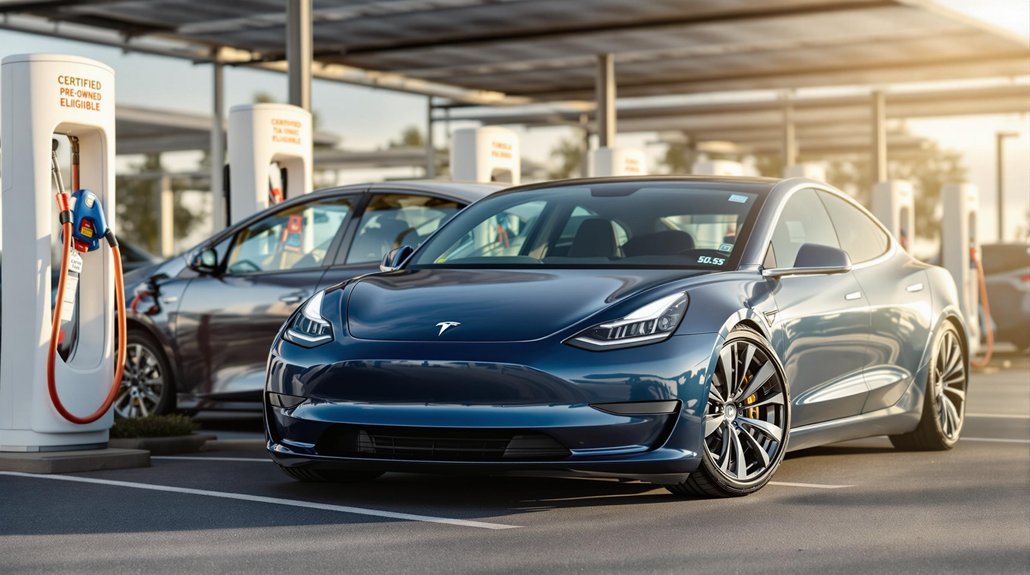

When prospective car buyers consider entering the electric vehicle market, why do so many hesitate at the prospect of purchasing a used EV? The answer lies primarily in concerns about battery degradation, a legitimate issue as older batteries can lose significant capacity, directly impacting driving range.
Battery replacement costs ranging from $5,000 to $20,000 represent a potential financial cliff that makes many buyers nervous. The battery health variation across models cannot be overstated. The Nissan Leaf, lacking active cooling systems, tends to degrade faster than competing models with more sophisticated thermal management.
Before purchase, I’ve found that checking warranty status is essential; many used EVs retain their original battery warranties, offering substantial protection against unexpected replacement costs. Most manufacturers provide 8-year warranties that can transfer to subsequent owners, offering significant peace of mind for used EV buyers.
Maintenance considerations typically favor EVs, requiring 30%-50% less upkeep than combustion engine vehicles. The absence of oil changes, spark plugs, and timing belts translates to measurable savings over time. These savings are enhanced by the lower electricity costs compared to traditional gasoline expenses.
Repair downtimes average just 1-7 days, minimizing inconvenience when service is needed. Reliability metrics vary considerably across the EV landscape. The Mini Electric boasts an impressive 98.4% reliability rating, while other models like the Chevrolet Bolt have faced serious recalls.
J.D. Power ratings, reaching up to 77/100 for certain models, provide valuable guidance for discerning buyers. The environmental calculus clearly favors used EVs over new purchases, with lower life-cycle emissions and reduced resource consumption.
Financial incentives in certain regions can make the proposition even more attractive, though depreciation concerns persist in markets without strong governmental support. It’s worth noting that cold weather can significantly impact performance, as cold temperatures can reduce an EV’s range by 10-24% due to battery chemistry limitations. Real-world range often disappoints, falling 15-30% below advertised figures.
The Mini Electric, for instance, delivers only 124 actual miles per charge. Prospective buyers must match vehicle capabilities to daily driving requirements to avoid charging anxiety.
Buying a used EV isn’t entirely risk-free, but with proper due diligence regarding battery health, warranty coverage, and realistic range expectations, it represents a calculated gamble with potentially significant environmental and financial rewards.