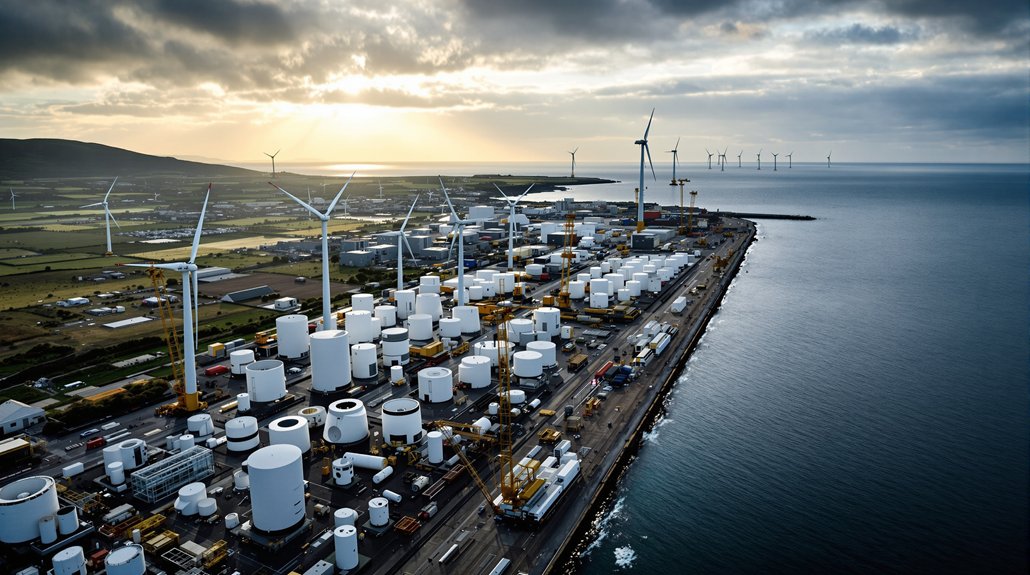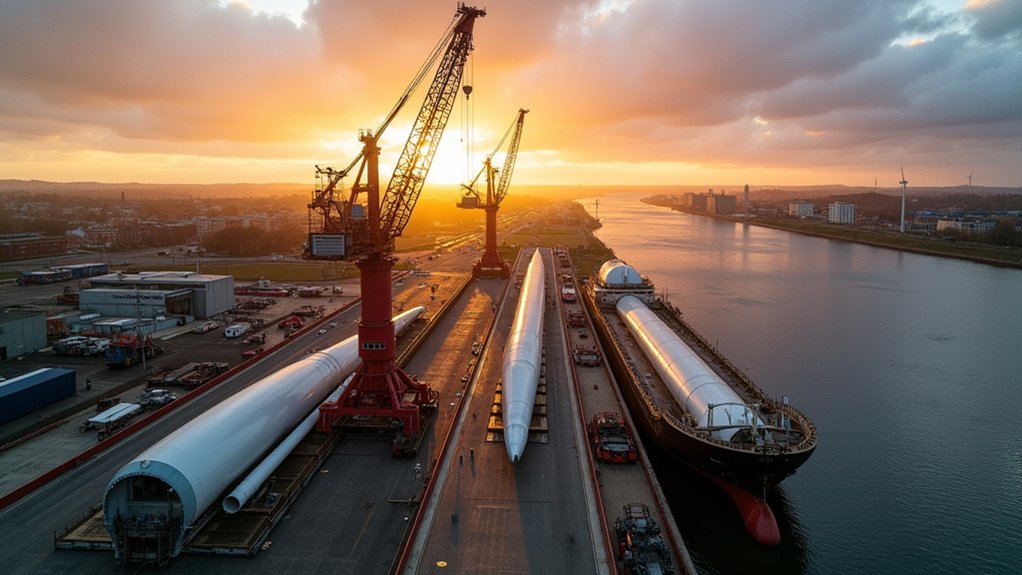

As Scotland continues its ambitious push toward renewable energy dominance, Peel Ports Clydeport has committed £3 million to transform King George V Dock in Glasgow into a specialized wind turbine component hub. The investment, announced on May 27, 2025, directly addresses the growing demand for handling infrastructure capable of accommodating increasingly massive wind turbine components. I’ve seen several port renovations, but this one stands out for its laser focus on renewable energy logistics.
The timing couldn’t be better. Clydeport is experiencing a wind turbine handling boom, with 2025 tracking to be a record year for component throughput. The technical upgrades include reinforced quayside areas, specialized handling equipment for oversized cargo, and modifications to manage the extraordinary weight and dimensions of next-generation turbines. These aren’t minor tweaks but thorough adaptations aligned with evolving manufacturing specifications. The port is expected to process over 60,000 tonnes of components in 2024 alone.
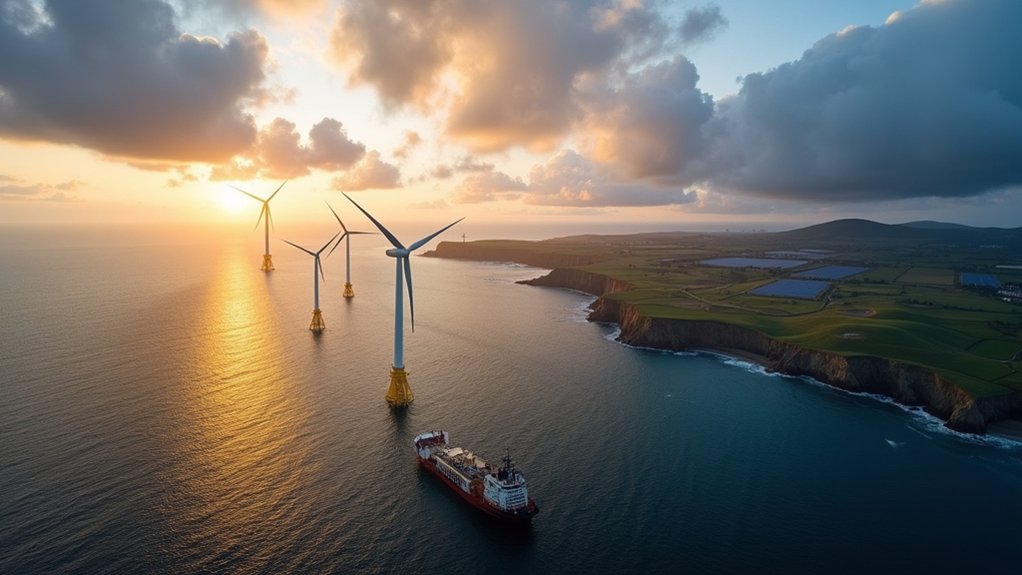
This strategic investment positions Clydeport as a leading Scottish renewables port, supporting the nation’s ambitious green energy targets. The upgraded facilities provide vital supply chain logistics for both construction and maintenance operations, serving offshore and onshore wind farm developments throughout the region. The port’s location offers ideal access to development areas, reducing transportation costs for turbine manufacturers. The facility has impressively processed components for over 1,200 wind turbines since 2005.
The economic ripples extend beyond the dock itself. Job creation in Scotland’s renewable sector continues to accelerate, with this investment supporting local supply chain development and adjacent industries including transportation and specialized manufacturing. It’s a clear vote of confidence in the long-term growth trajectory of Scottish wind energy.
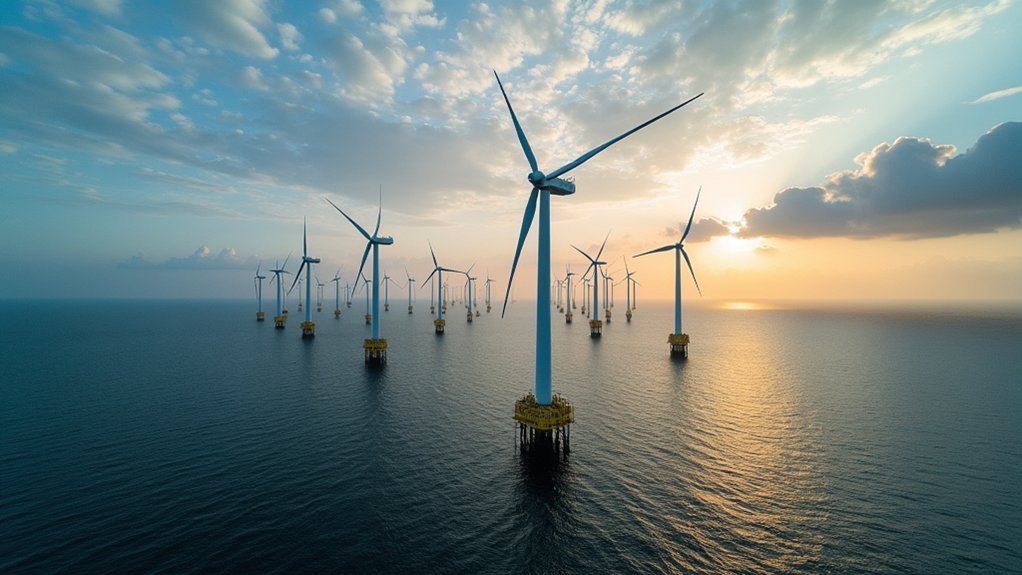
These improvements complement existing large-scale wind energy projects like the Clyde Wind Farm, one of Europe’s largest operational onshore facilities with 206 turbines. Similar expansions are underway elsewhere, including the Port of Nigg redevelopment announced in March 2025.
Looking ahead, Clydeport stands ready to capitalize on continued growth in both onshore and offshore wind development. The £3 million investment, while modest compared to some infrastructure projects, delivers outsized returns in positioning Glasgow as a pivotal hub in Scotland’s expanding green energy network.