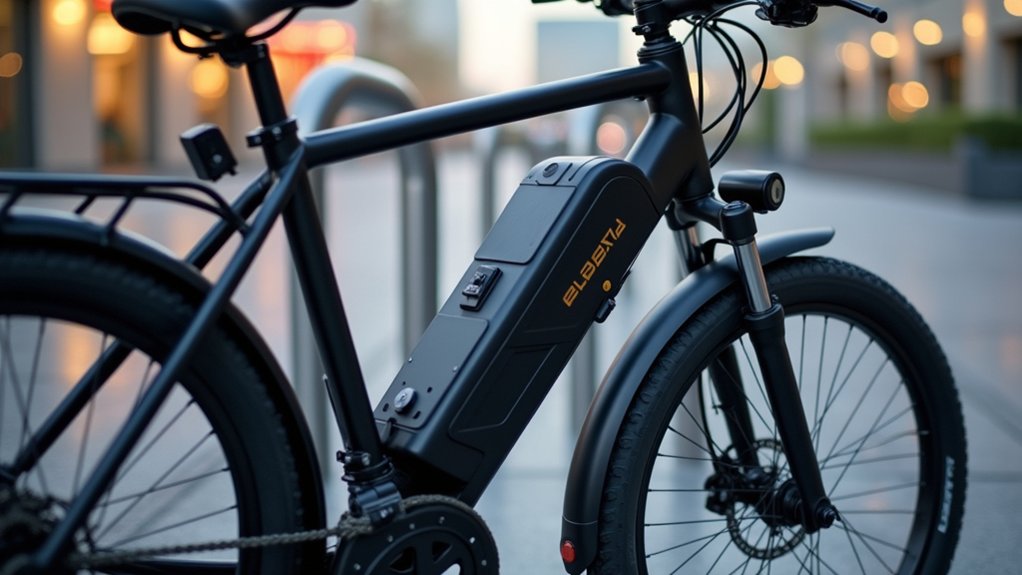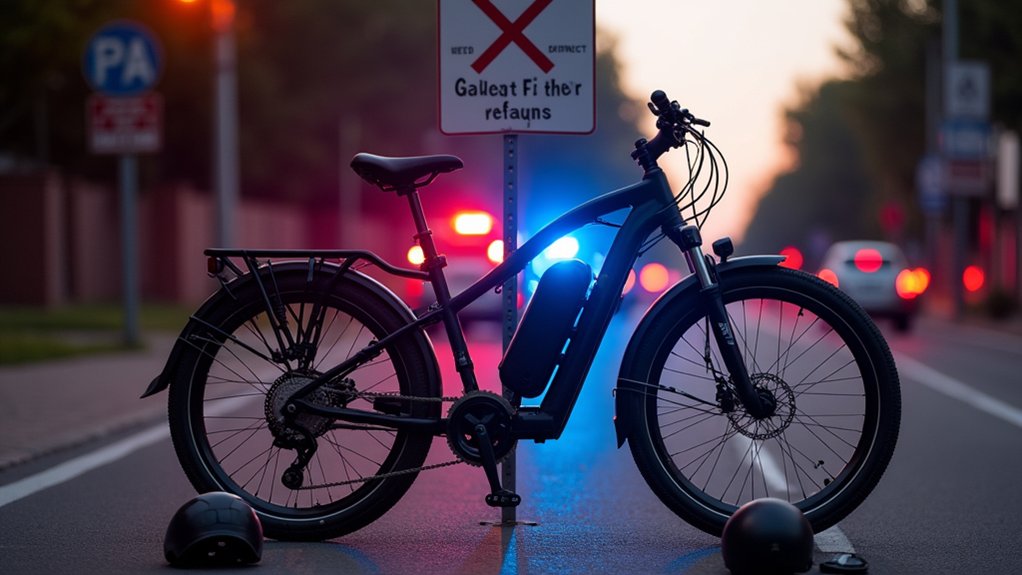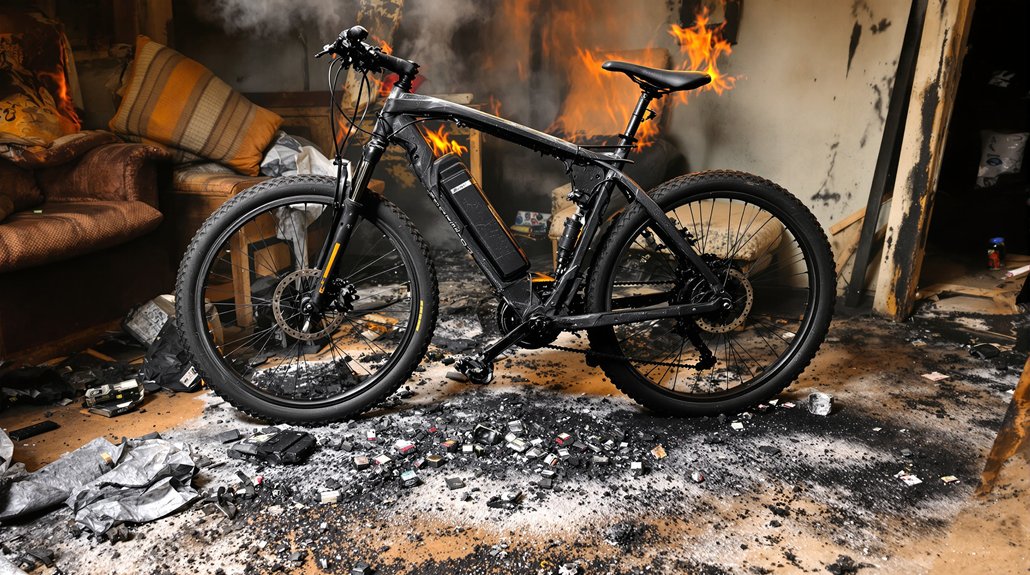

While the surging popularity of e-bikes has created a cottage industry of DIY battery builders, these homemade power sources have become a significant public safety threat with potentially deadly consequences. The recent Peterborough fire, which gutted an apartment complex and displaced fourteen families, traces directly to a non-certified lithium-ion pack that underwent thermal runaway during overnight charging.
The statistics paint a grim picture. E-bike battery fires have increased a staggering 793% since 2019 in New York City alone, with 268 incidents and 18 fatalities recorded in 2023. These aren’t mere accidents—they’re predictable failures stemming from fundamental construction flaws. I’ve examined dozens of DIY battery builds, and the absence of proper Battery Management Systems remains distressingly common.
The exponential rise in e-bike fires reflects not random mishaps but predictable failures from amateur battery builds lacking essential safety systems.
Homemade batteries typically lack UL certification, often featuring substandard cells sourced from questionable suppliers. The Peterborough incident exemplifies the cascading failure modes: improper spot welding created high-resistance connections, generating localized heating that eventually compromised cell integrity. Once thermal runaway initiated, the apartment became engulfed in flames within three minutes—typical of lithium chemistry’s aggressive combustion profile. Any physical impact or damage to these poorly constructed batteries dramatically increases their likelihood of catastrophic failure.
Most alarming is the 18650 cell ejection phenomenon. Under pressure, individual cells become high-velocity projectiles capable of igniting secondary fires throughout a structure. The Peterborough fire spread precisely this way, with recovered cells found embedded in drywall over 15 feet from the origin point. These incidents highlight why proper storage away from flammable materials is essential for preventing catastrophic outcomes.
Regulatory response remains fragmented. While NYC has banned uncertified batteries and implemented exchange programs, many municipalities lack thorough safety frameworks. Despite the growing entry-level market for affordable commercial e-bikes under $2,000 with certified batteries, consumers frequently underestimate risks, with 49% inadvertently blocking fire escapes during charging.
For e-bike owners, the safety calculus is straightforward: factory-certified batteries with intact BMS circuitry offer reasonable safety margins. Conversely, DIY alternatives deliver false economy at tremendous risk. The $200 saved on a homemade battery in Peterborough ultimately cost millions in property damage and nearly claimed lives—a sobering reminder that some corners should never be cut.