As e-bikes surge in popularity across the country, lawmakers and regulators struggle to create coherent legal frameworks that balance innovation with public safety concerns. The three-class system adopted by most jurisdictions—Class 1 (pedal-assist, 20 mph), Class 2 (throttle, 20 mph), and Class 3 (pedal-assist, 28 mph)—aims to distinguish e-bikes from electric motorcycles, but inconsistent implementation across states creates confusion.
The rapid rise of e-bikes has left regulators scrambling to balance innovation and safety through inconsistently implemented classification systems.
The 2025 regulations establish a unified 750-watt maximum continuous motor output across all e-bike classes. Exceeding this threshold or the 28 mph speed limit automatically reclassifies the vehicle as a motorcycle—subject to entirely different licensing, insurance, and registration requirements.
Unfortunately, many riders ignorantly or willfully disregard these limitations when purchasing Surrons or installing powerful conversion kits. Most legal e-bikes don’t require licenses or registration, but modifications that push bikes beyond established specifications create regulatory gray areas. In most states, riders enjoy the freedom of operating e-bikes without the need for special licenses regardless of which class they ride.
These ambiguities leave police officers uncertain about enforcement and riders confused about compliance. I’ve witnessed this confusion firsthand at community meetings where both sides express frustration over unclear guidelines. Class 4 e-bikes are completely excluded from bicycle infrastructure since they’re legally motorized vehicles rather than bicycles.
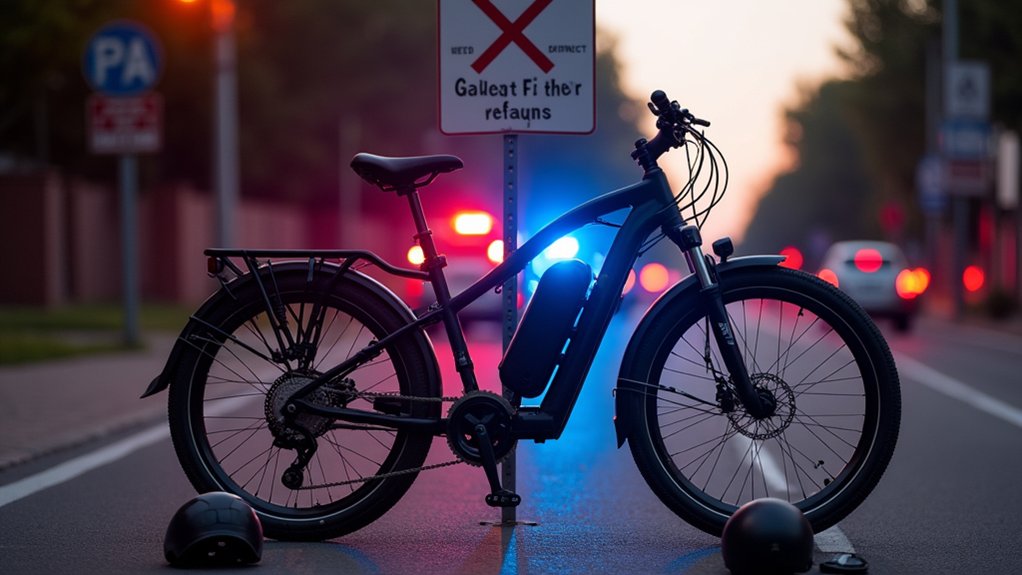
Helmet requirements vary considerably, with stricter mandates for Class 3 riders and those under 18, but compliance remains spotty. This patchy adherence to safety regulations becomes particularly problematic as e-bike accident rates climb, fueling calls for tighter restrictions.
Path and road access presents another friction point. Class 3 e-bikes face more restrictions, often prohibited on dedicated bike paths where Class 1 and 2 bikes are welcome. Reports of reckless riding and “yobbo behaviour” have prompted proposals for outright bans in some areas, threatening access for all e-bike riders regardless of their personal conduct.
The regulatory landscape continues to evolve in response to legitimate safety concerns, but the actions of a few irresponsible riders—particularly those with illegally modified high-powered machines—threaten to trigger overreaching legislation that punishes the law-abiding majority. Despite these challenges, e-bikes remain a cost-effective transportation option with significantly lower operating costs than conventional vehicles.
For the e-bike community’s future, compliance with existing regulations isn’t optional—it’s essential to preserving reasonable access and freedoms.