While Audi continues its march toward full electrification with the upcoming A6 e-tron, the 2025 A6 e-hybrid quattro represents a compelling bridge technology for those not quite ready to commit to an EV lifestyle. Available in both Sedan and Avant body styles, this plug-in hybrid combines a punchy 2.0 TFSI engine with a robust electric motor to deliver impressive system outputs of either 270 kW/500 Nm or 220 kW/450 Nm.
The powertrain’s versatility is undeniable. In higher-output form, the A6 e-hybrid sprints to 100 km/h in just 5.3 seconds, while the entry variant manages a respectable 6.0 seconds. All models share an electronically limited top speed of 250 km/h—more than sufficient for most autobahn sessions. The full electric A6 e-tron will offer even more impressive performance with dual-motor powertrain options delivering up to 543 hp in the S6 variant.
Performance never compromises—sprint to 100 km/h in 5.3 seconds with autobahn-ready top speeds of 250 km/h.
I found the hybrid control system particularly intuitive, offering distinct EV and Hybrid modes with a clever virtual slider for setting target charge levels.
Battery capacity sees substantial improvement over the predecessor, now offering 25.9 kWh gross (20.7 kWh net)—approximately 45% larger. This translates to more than 100 km of electric-only range under WLTP testing. Drivers should note that cold temperatures can reduce this range by 10-24% due to battery chemistry limitations.
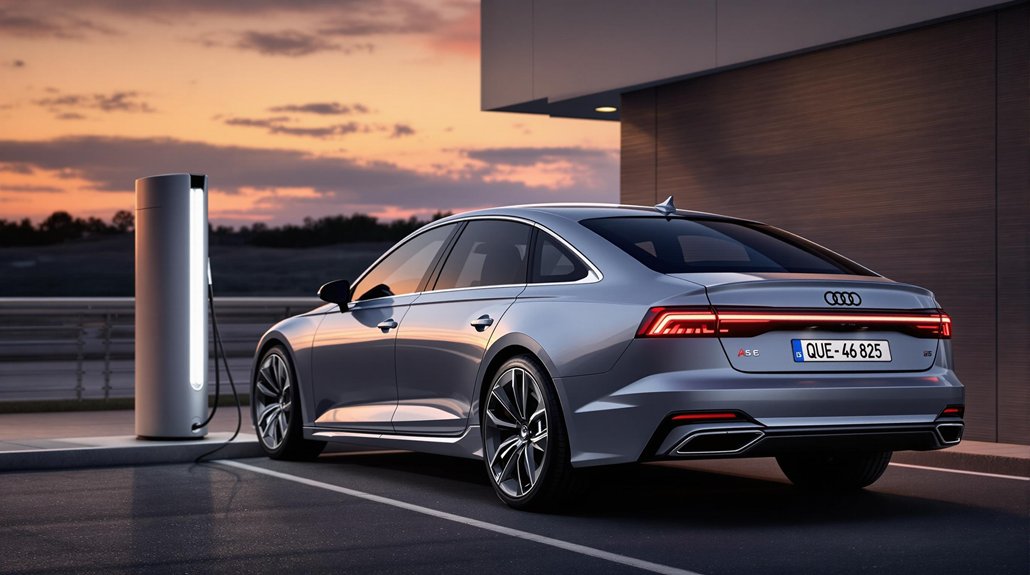
Charging capabilities, however, reveal one of the model’s compromises. The 11 kW AC maximum charging rate means owners will need about 2.5 hours for a full recharge—acceptable for overnight charging but less convenient for quick top-ups. The 270 kW model comes standard with S line exterior and sports suspension, giving it a more aggressive stance than the base variant.
The regenerative braking system deserves praise for its adjustability via paddle shifters, allowing drivers to tailor deceleration characteristics to driving conditions. Route-based recuperation works admirably even without active navigation input.
Quattro all-wheel drive comes standard across the lineup, enhancing both traction and the integration of hybrid components. The electrified rear light design provides a subtle visual distinction from conventional A6 models.
While the A6 e-hybrid quattro cannot match the upcoming A6 e-tron’s 270 kW DC fast charging or 456 hp peak output, it strikes a reasonable balance between efficiency and performance. For drivers seeking to reduce emissions without the anxiety of pure EV ownership, Audi has crafted a sophisticated—if somewhat compromised—solution.