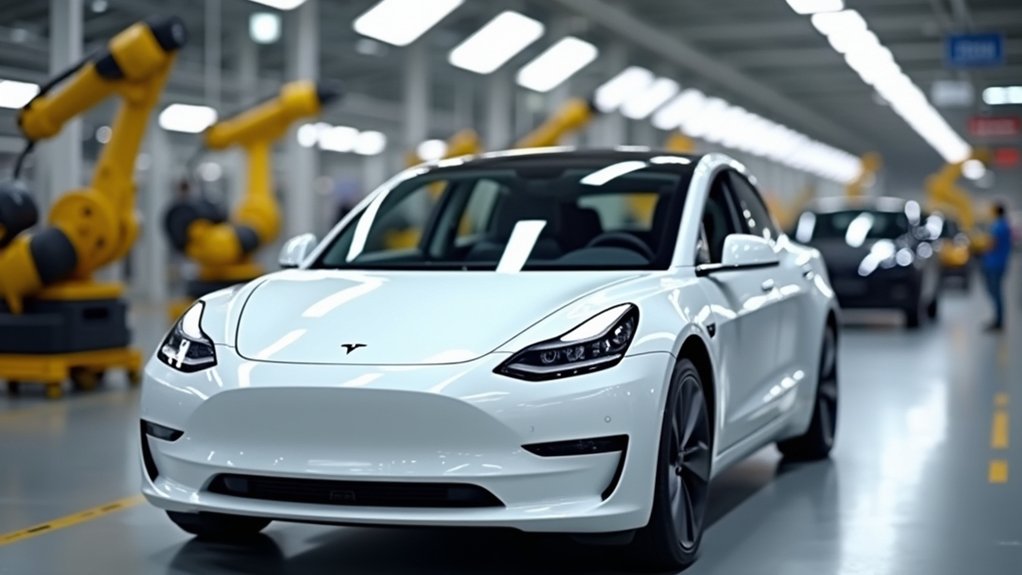
While Tesla has long teased a $25,000 electric vehicle to bring EVs to the masses, the company has dramatically shifted its approach in recent months. Internal plans for entirely new affordable models, codenamed NV91 and NV92, have been shelved in favor of a more pragmatic solution: creating stripped-down versions of Tesla’s existing Model 3 and Model Y vehicles. This pivot leverages underutilized production capacity and addresses recent demand challenges without requiring significant new capital investment.
Tesla abandons ambitious budget EV plans for practical solution: simpler Model 3 and Y variants to fill the affordable market gap.
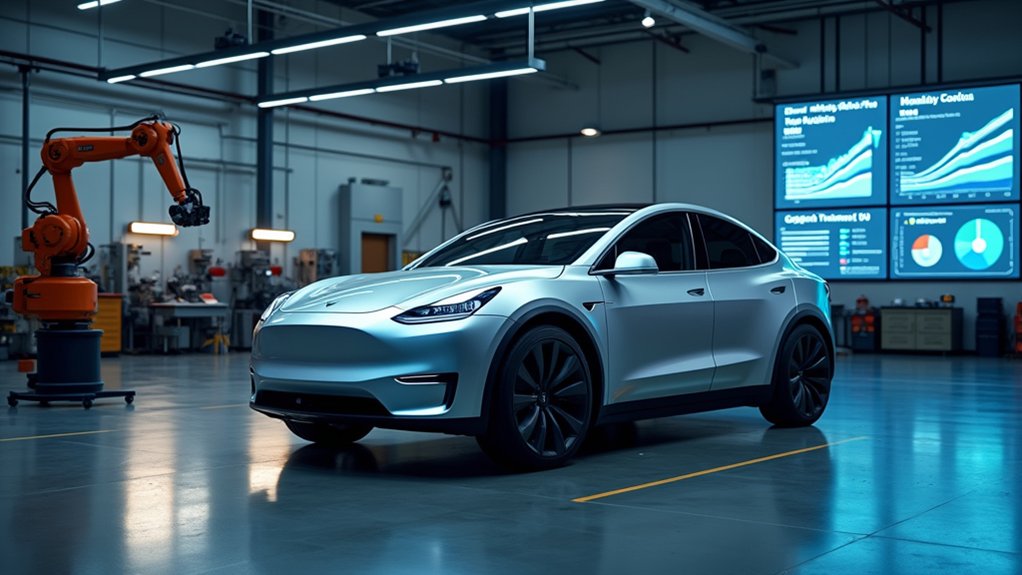
The strategy allows Tesla to enter the budget EV segment by utilizing its current manufacturing infrastructure across its Gigafactories, particularly in Shanghai. By maintaining the core design and structure of the original models while reducing features and trim levels, Tesla can achieve substantial cost savings. I’ve noticed this approach mirrors Tesla’s historical preference for iterative improvement rather than clean-sheet designs when addressing market pressures.
These affordable variants will target the $25,000-$30,000 price bracket, positioning Tesla to compete directly with budget-friendly offerings from rivals like Hyundai’s Ioniq 6 and Subaru’s Solterra, both priced in the high $30,000 range. This strategy addresses the significant price gap, as the average new electric vehicle currently costs $55,353 according to recent market data. The external differentiation between standard and cheaper versions will likely be minimal, with cost reductions coming primarily from simplified interiors, reduced tech features, and streamlined options.
Production will initially focus on China, where competition from local EV manufacturers has intensified dramatically. The vehicles will be assembled on existing Model 3 and Model Y production lines, with cost efficiencies achieved through parts standardization and potential localization of components. Used Model 3s are already available around used EV prices, making Tesla ownership accessible to budget-conscious consumers.
Elon Musk has reportedly reserved Tesla’s next-generation platform for future models like the Cybercab, making this strategy a pragmatic interim solution. The approach represents a calculated trade-off between innovation and market responsiveness, allowing Tesla to maintain its position in price-sensitive segments while working on more revolutionary designs behind the scenes.
For consumers seeking Tesla ownership at a lower price point, these stripped-down variants may provide an attractive entry option without sacrificing the core Tesla driving experience.