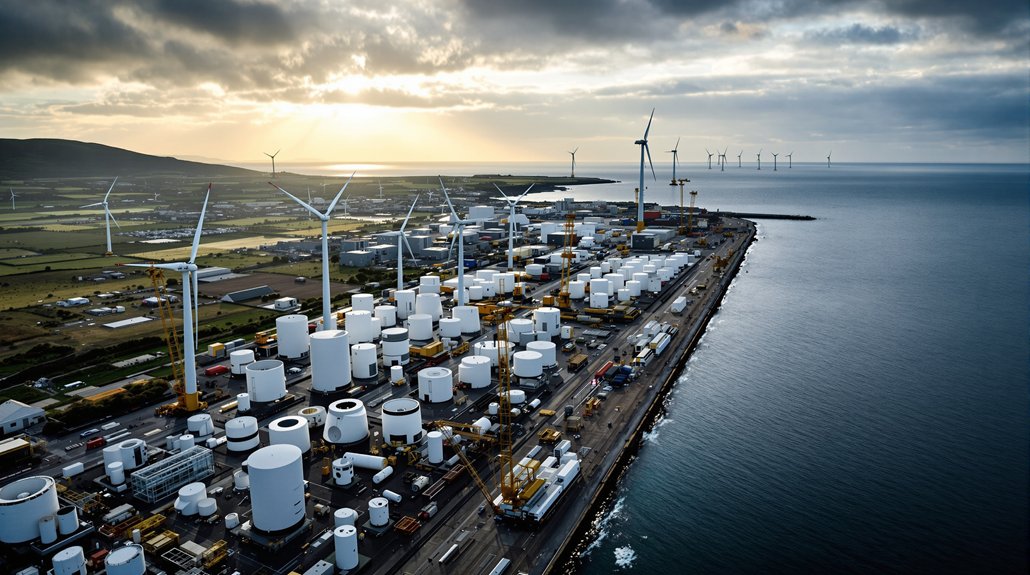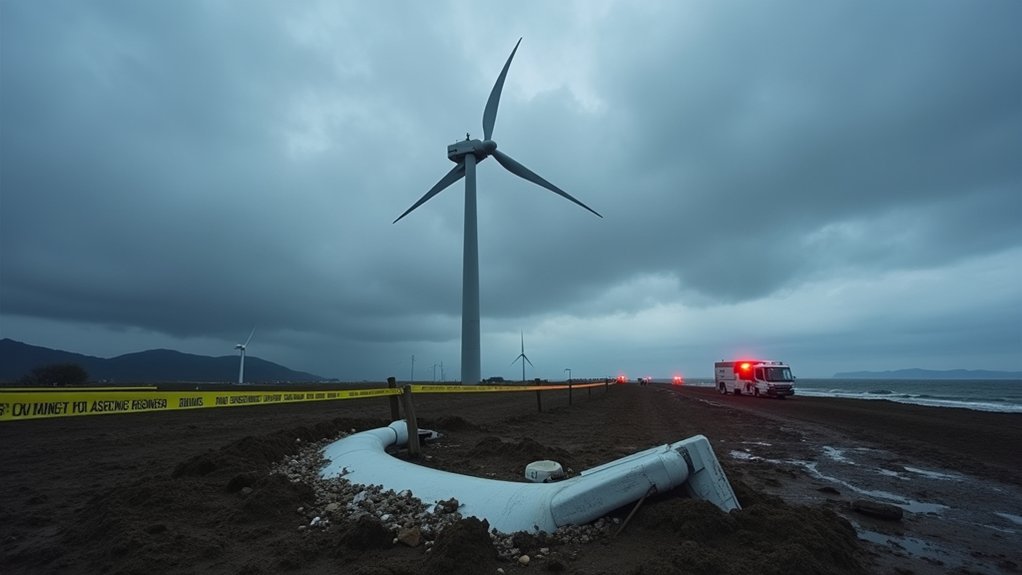

While wind energy stands as a pillar of Japan’s renewable power strategy, a catastrophic equipment failure in Akita Prefecture has cast a shadow over the industry’s safety protocols. Early Friday morning on May 2, 2025, authorities received an alarming 10:15 a.m. notification that a wind turbine propeller had detached and fallen to the ground with devastating consequences.
The incident resulted in the death of a man found unconscious beside the fallen component. Emergency responders rushed to the scene immediately upon notification, transporting the victim to a nearby hospital where he was later pronounced dead. The turbine’s propeller showed visible damage, completely separated from the main structure.
This tragic occurrence bears concerning similarities to previous wind turbine failures. Japan experienced comparable incidents during 2018’s Typhoon Cimaron, though without casualties. The global wind energy sector has witnessed several fatal accidents, including five deaths in China earlier this year from installation and maintenance mishaps.
Officials have launched a thorough investigation, though the exact cause remains unclear. Weather conditions, mechanical defects, and maintenance oversights will all feature prominently in their inquiry. The technical assessment will likely scrutinize torque specifications, fatigue analysis, and structural integrity of the mounting hardware. The government report on the Chinese incidents specifically identified ineffective management practices as a contributing factor to wind turbine accidents. Investigations into similar accidents have identified insufficient connection points as a critical safety issue that can lead to catastrophic failures.
Wind farms in Japan’s coastal regions like Akita operate in challenging environmental conditions, balancing the imperative for clean energy production against safety concerns. The incident raises legitimate questions about inspection protocols and equipment lifecycle management in Japan’s growing renewable sector.
For local communities, such catastrophic failures elevate concerns about proximity to wind installations. Industry stakeholders must now confront heightened scrutiny while cooperating with investigating authorities.
The fallout from this tragedy will likely ripple through both regulatory frameworks and public perception. While isolated incidents shouldn’t undermine the crucial role of wind power, they serve as sobering reminders that even renewable energy infrastructure demands rigorous safety standards.
The coming weeks will reveal whether this represents a one-off failure or signals deeper industry-wide challenges requiring systemic remediation.