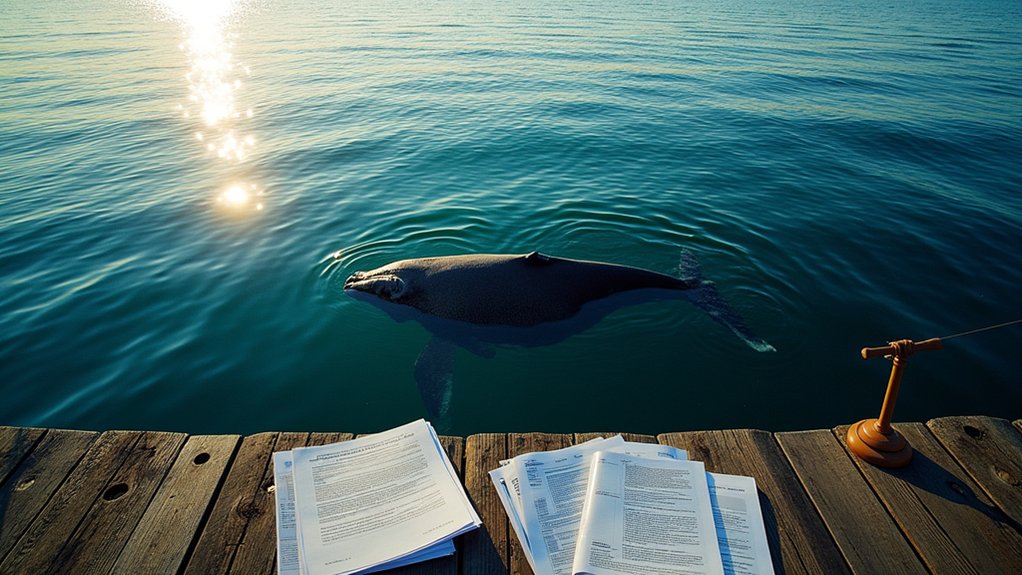

In a persistent battle against offshore wind development, Nantucket-based nonprofit ACK for Whales has launched another legal challenge targeting offshore wind projects along the East Coast. The organization recently filed a petition asking the Environmental Protection Agency to rescind permits granted to Vineyard Wind, continuing their opposition campaign that has now expanded to include New England Wind’s permits as well.
The latest legal actions, filed in March 2025, come on the heels of a Supreme Court decision that declined to hear ACK for Whales’ previous case on January 13, 2025. The high court’s rejection was not entirely unexpected, as it accepts only about 2% of the roughly 7,000 cases brought each year.
ACK for Whales, led by president Vallorie Oliver, has consistently raised environmental concerns about offshore wind development. Their recent petition claims inadequate assessment of emissions related to blade failures and emergency repairs, arguing such operations could greatly increase volatile organic compounds, NOx, and particulate matter.
Environmental advocates highlight hidden emissions from wind project failures, raising concerns about air quality impacts from maintenance operations.
The group previously alleged violations of the Endangered Species Act regarding North Atlantic right whales. The First Circuit Court ultimately upheld federal approval for the Vineyard Wind project on April 24, 2024, rejecting the residents’ challenges to the biological opinion. These challenges follow a pattern established by similar anti-offshore wind groups. In New Jersey, a comparable petition against Atlantic Shores Offshore Wind proved successful, with the EPA remanding that project’s Clean Air Act permit. That decision cited President Trump’s memorandum ordering review of all offshore wind projects.
The Town of Nantucket has separately sued to block the SouthCoast Wind project, demonstrating the breadth of opposition to offshore wind development in the region. Once completed, SouthCoast Wind would provide electricity to over 840,000 homes, representing a significant addition to the region’s renewable energy capacity. Federal agencies, including the Bureau of Ocean Energy Management and Environmental Protection Agency, now face mounting pressure to reconsider permits.
Previous court decisions have not favored ACK for Whales, with two lower courts dismissing their case against Vineyard Wind before the Supreme Court declined review. Federal studies have consistently cited ship traffic, not wind projects, as the primary threat to right whales.
Nevertheless, the organization appears committed to continuing their legal strategy against offshore wind development along the Atlantic coast.