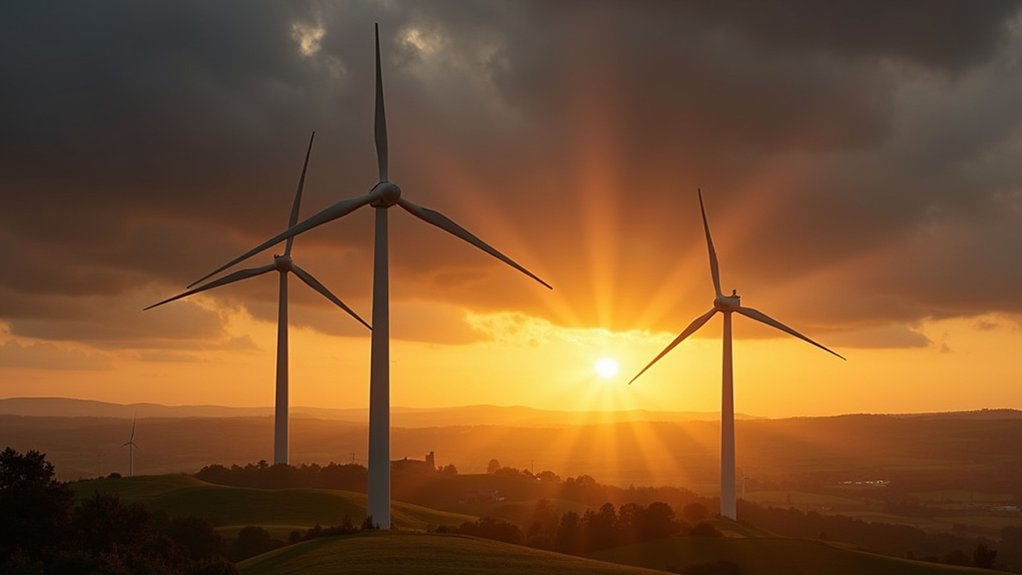
Three colossal wind turbine projects have received final approval for construction in 2025, signaling a significant advancement in renewable energy infrastructure worldwide. Local communities have expressed mixed reactions to the announcement, with environmental advocates celebrating the green energy milestone while some residents voice concerns about visual impact and potential noise pollution.
The approved projects will feature next-generation turbines, including models similar to China’s record-breaking 436-foot blades, dwarfing conventional installations that typically generate only 2-3 megawatts. These new titans will produce upwards of 15 megawatts each, dramatically improving energy yield per installation. The torque specifications alone are revolutionary.
Germany’s 960-megawatt He Dreiht offshore project leads the European contingent, utilizing Vestas 15MW turbines that represent the pinnacle of current wind technology. The UK follows closely with Dogger Bank Wind Farm‘s first phase commencing in late 2025, which will eventually power approximately 6 million British homes by 2027.
Local opposition centers primarily on aesthetic concerns. “These structures will fundamentally alter our landscape,” claimed one community spokesperson. I’ve analyzed similar objections in previous installations and found that property value impacts are typically overstated.
GE Vernova, commanding 56% of onshore installations in 2024, continues to dominate the market, while Vestas maintains a strong 40% share. The technological arms race has intensified as manufacturers push size limitations to maximize efficiency.
Despite the controversy, economic benefits remain compelling. Each project creates substantial employment in manufacturing, construction and maintenance sectors. The scaling economics are particularly favorable – larger turbines generally translate to lower cost per megawatt hour generated. This follows the success model of China’s Gansu Wind Farm, which has achieved an impressive 10 GW capacity and continues to expand.
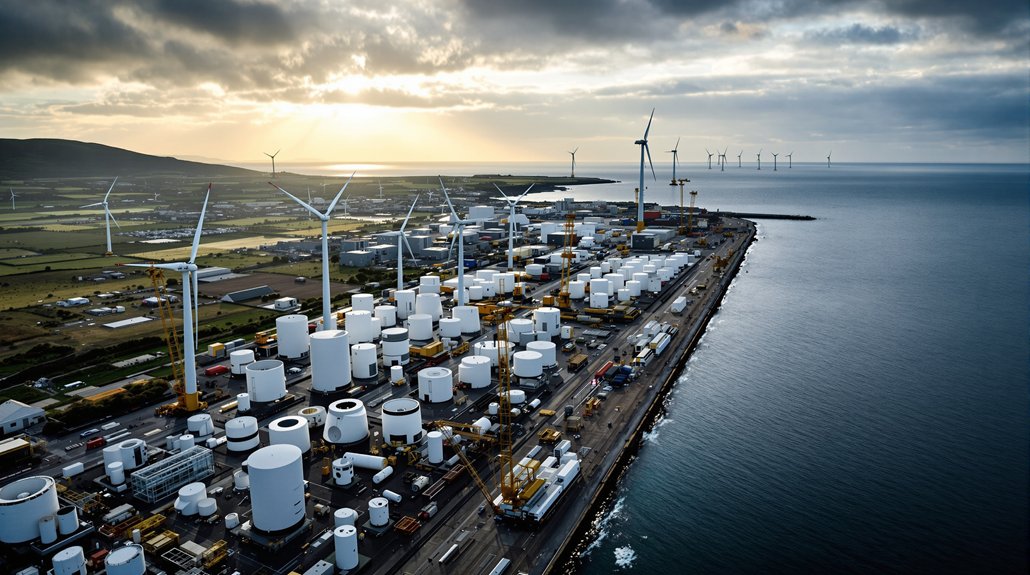
The logistics of transporting these massive components presents extraordinary challenges. Specialized hubs like Yangzhou Port have become critical infrastructure nodes for the industry, demonstrating advanced capabilities in handling oversized components. China’s renewable energy sector has invested 13.6 trillion yuan in various projects this year alone, further cementing their global leadership position.
These developments come as the U.S. wind industry prepares for a rebound, projecting 6.3 gigawatts of new capacity in 2025 after experiencing its lowest installation rate in a decade during 2024. Industry analysts expect this growth trajectory to continue despite political uncertainties.