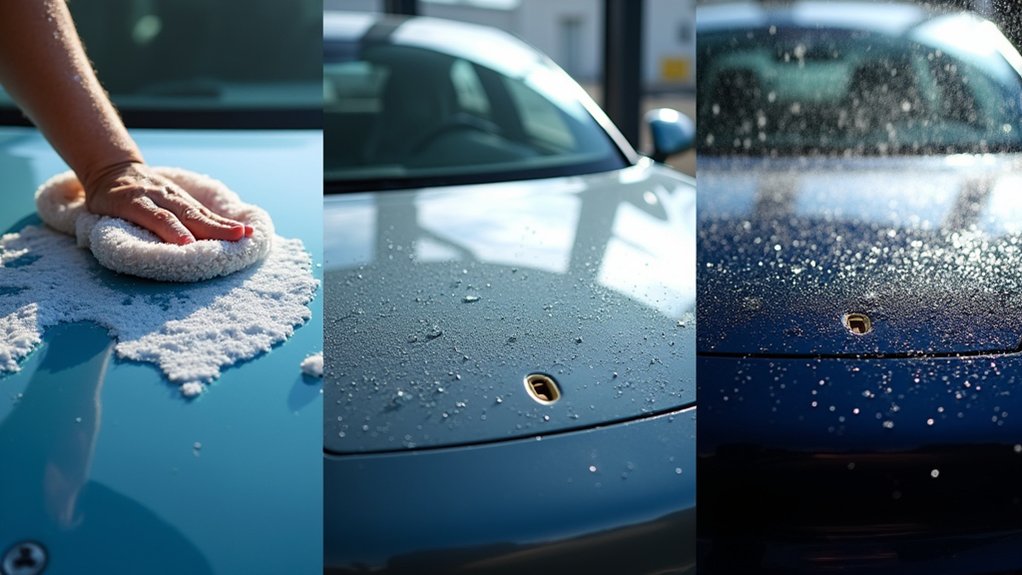

How vehicle owners choose to clean their cars can greatly impact both the immediate appearance and long-term condition of their automotive investments. The difference between preservation and degradation often comes down to understanding the mechanical and chemical interactions between washing methods and automotive clear coats.
Traditional hand washing, when performed using the two-bucket method with grit guards, provides superior protection against micro-marring compared to automated alternatives. I’ve observed that proper hand washing technique – pre-rinsing, using pH-neutral soap, and drying with 300-400 GSM microfiber towels – consistently preserves clear coat integrity over 5+ year periods.
This method requires 45-60 minutes of labor but delivers unmistakable quality results.
Automatic tunnel systems with soft-touch cloths offer convenience at 1/3 the time investment but introduce cumulative risks. These systems typically apply 0.5-0.7 mm of clear coat abrasion annually through microscopic scratching, particularly evident on dark-colored vehicles under direct sunlight.
The trade-off: 8-12 minutes of processing time versus long-term finish deterioration.
Touchless jet wash systems mitigate physical abrasion concerns but compensate with aggressive chemicals. The 11-12 pH alkaline solutions effectively remove road grime but simultaneously degrade wax coatings and synthetic sealants after 3-4 washes, requiring more frequent protection reapplication.
Self-service facilities split the difference, offering personal control while reducing resource investment. However, these stations often suffer from contaminated wash tools and inconsistent maintenance schedules, creating high variability in results. These automated options can complete the washing process in under 10 minutes, making them ideal for busy individuals who still want a clean vehicle. The industry offers six primary car wash types including hand car washes, self-serve, in-bay automatics, express, flex, and full-service options.
The emergence of rinseless and waterless alternatives using polymer-enhanced solutions addresses environmental concerns while maintaining finish quality. These systems use 1-2 gallons versus traditional washing’s 50-100 gallon consumption, though effectiveness diminishes on heavily soiled surfaces.
Ultimately, the best approach depends on various factors: time constraints, environmental conditions, and vehicle age. For maximum paint preservation, a monthly hand wash supplemented with quarterly paint decontamination and semi-annual protective coatings represents the gold standard in automotive aesthetic maintenance.