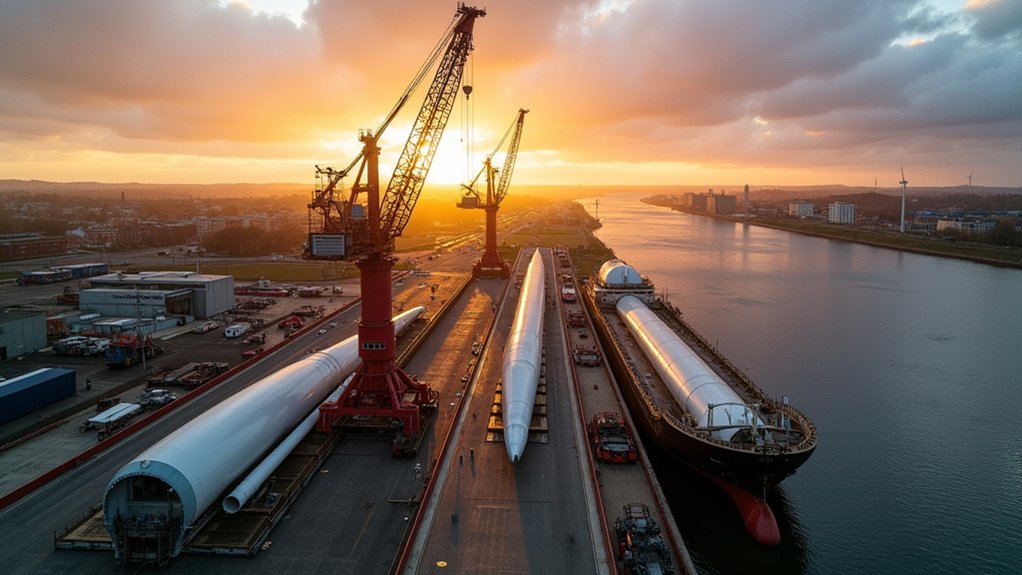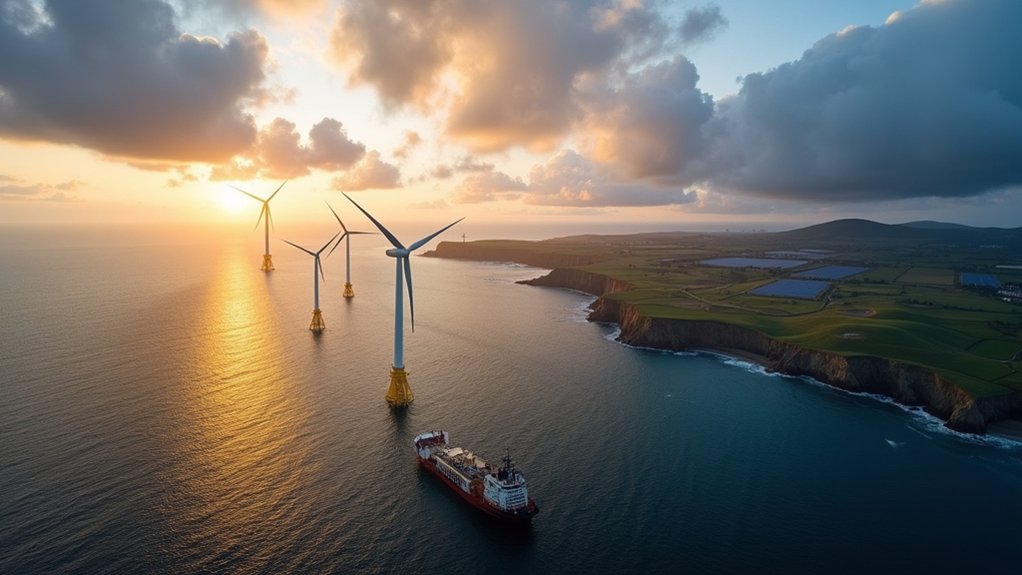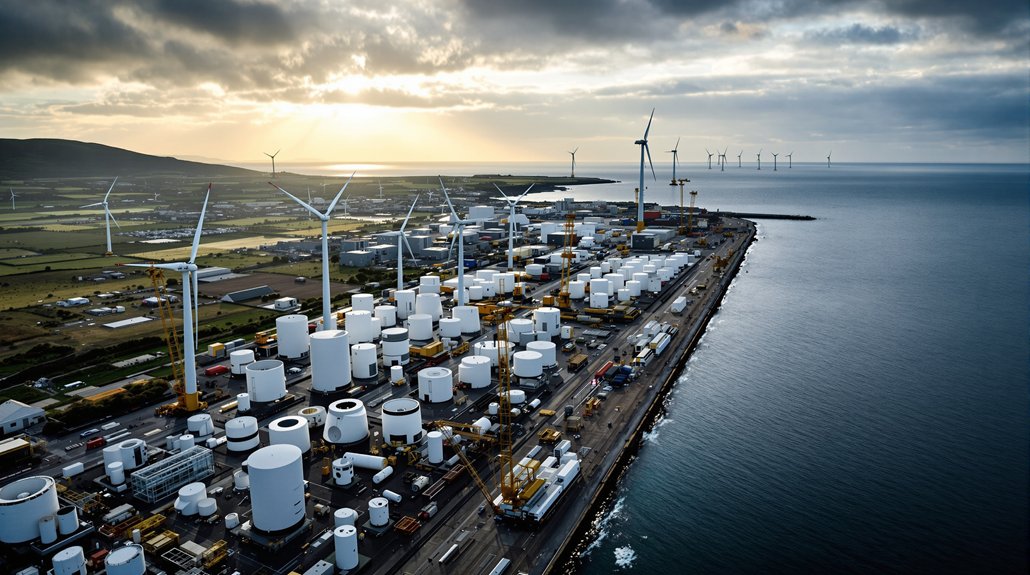
In a landmark move for Britain’s renewable energy sector, Ming Yang, China’s largest privately owned wind turbine manufacturer, has announced plans to establish what it calls the country’s “first fully integrated offshore wind manufacturing facility” in Scotland. The ambitious project carries an impressive price tag of up to £1.5 billion ($2 billion), positioning it among the largest investments in the UK’s offshore wind sector to date.
The investment will be strategically phased, beginning with an initial £750 million dedicated to advanced manufacturing operations. Production is targeted to commence by late 2028, with Ardersier Port near Inverness emerging as the preferred location after an extensive site selection process that considered multiple Scottish locations.
Ming Yang’s facility will produce both wind turbine nacelles and blades initially, addressing key components of modern wind energy systems. I’ve observed that the all-encompassing approach distinguishes this project from more limited manufacturing operations.
Ming Yang’s comprehensive manufacturing approach sets a new standard, moving beyond isolated component production in Britain’s wind energy landscape.
The second phase aims to expand capabilities for floating offshore wind technology, while the third phase will incorporate manufacturing of control systems, electronics, and other essential components. This facility will support the large-scale deployment of floating technology throughout the UK.
The company recently revealed an ambitious 50 MW floating wind turbine concept, showcasing their commitment to pushing technological boundaries. Their 16.6 MW Ocean X floating turbine design promises to reduce offshore wind costs by up to 30%, a game-changing proposition for the industry’s economics.
Beyond energy production, the project represents significant workforce opportunities, particularly for former oil and gas sector workers seeking change into renewable energy. The company has engaged in extensive discussions with UK and Scottish governments over the past two years to facilitate this substantial investment. The facility is strategically positioned to serve UK, European, and other non-Asian markets, expanding Ming Yang’s global footprint beyond its traditional Asian base.
This substantial Chinese investment arrives at a pivotal moment in Britain’s energy shift, creating new manufacturing capacity while simultaneously raising questions about foreign influence in critical infrastructure.
The project’s execution will be closely watched for its technological delivery, economic impact, and geopolitical implications in the rapidly evolving renewable energy landscape.